
Not Just A Guest: How Food Tells a Story in The Menu
- JY
- Apr 26
- 3 min read
In The Menu, the dinner is not just a dinner. JY explores how food becomes a weapon for exposing elitism, ego, and the slow death of artistic passion. (TW: suicides & gore)

When talking about movies themed around food, The Menu (2022) is a must watch recommendation from me. This black comedy horror film follows a couple visiting the island restaurant of a renowned chef, whose tasting menu comes with sinister intentions for his guests. What draws me to the movie isn’t just the excellent writing and strong performance, but the way food becomes a powerful narrative device for social commentary on elitism. Naturally, spoilers ahead!
The couple played by Anna Taylor-Joy (Margot) and Nicholas Hoult (Tyler) visit a secluded island along with several other customers, all paying exorbitant prices for a meal course prepared by celebrity chef, Julian Slowik (Ralph Fiennes). There is a notable hint of bitterness within each course, all subtly criticising how the fine dining experience is less about the food and more so for the patrons to stroke their own egos or flaunt their wealth.

The third course, “Memory”, is a great example of using food to amp up the tension in the film. Chef Slowik recounts a graphic memory of him stabbing his abusive father in the thigh with scissors mirrored by the chicken dish pierced the same way The course comes with tortillas too, each printed with personal memories and accusations about each guest, including fraudulent financial records and affairs. This demonstrates the hold Slowik holds over the guests at the dinner, and too, shows his bitterness toward an industry where years of work can be destroyed by something as careless as a critic’s bad review.
By now, the guests are visibly rattled, and the next course would set to confirm their fears: one of Slowik’s sous-chefs has a deadly encounter with a gun, staged to show how those in this industry can put in years of blood, sweat and tears, only for the rich to exploit them and remain perpetually unsatisfied, slowly killing off the dreams of those who have devoted their lives to perfecting this art. At this point, it was clear to everyone. They were all going to die tonight.
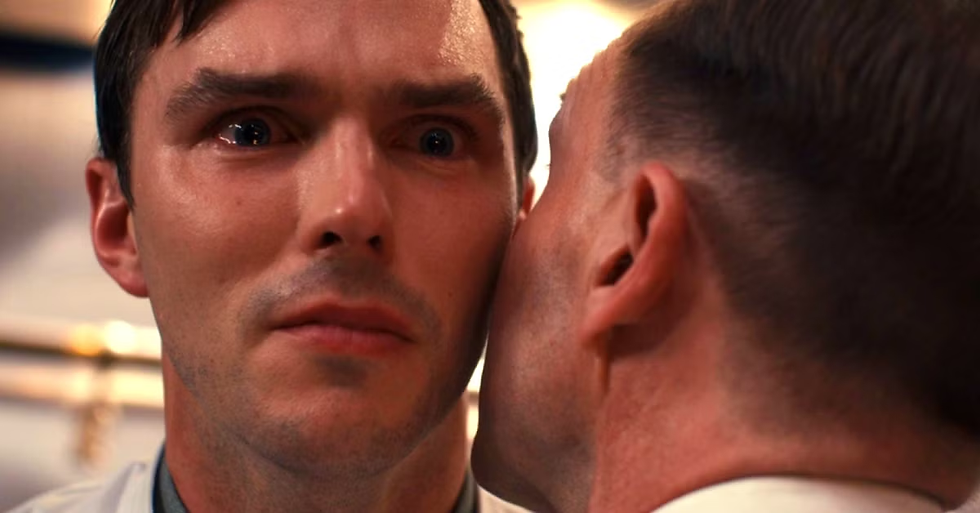
There is another course, though not made by Chef Slowik himself, is used to expose the flaws and insecurities of his guests through Tyler, who has been a self-absorbed and self-proclaimed food expert. Slowik asks Tyler to cook a meal with no training or instructions, then reveals that Tyler had known all along about the plan to kill the guests, yet still attended out of blind admiration and the belief that he might somehow be spared. Tyler’s failure to cook anything close to Slowik’s standards leads him to public humiliation and eventual death. His dish critiques those who consume art obsessively yet lack the ability to create it, mistaking proximity to the artist for artistic understanding or status.
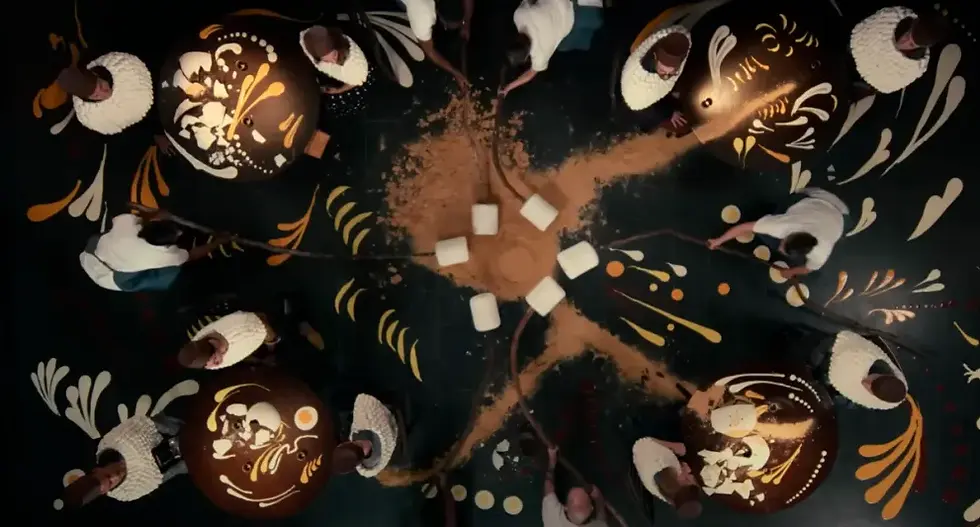
The very final course of the night and the movie is a simple one. Dubbed ‘S’mores’, the guests are wrapped as desserts and set ablaze by Chef Slowik. In a way, this shows how Slowik sees this course as a critique of his guests, how they turn people like him, artists, into something that is consumable and exploitable. Furthermore, it highlights how in the end, those with all the power, wealth and status would still meet their end the same way any other human would. In death, everyone is equal and any material differences are made worthless.
Margot would be the only person left to be spared by Slowik. This may have been partly in tie with her ordering of a simple American cheeseburger. Inspired by a picture of a younger but happier Chef Slowik cooking in a fast food chain, Margot’s order helped reignite Slowik’s love for cooking. The movie directly shows the contrast in the burger and the other dinner courses, by adding in vibrant colours and pleasant sounds that the other meals lack. Under the pretense of being too full, Margot was able to pack the burger to go, using Slowik’s brief sentimental state to flee the island and her death.
The Menu is a movie with many layers of storytelling through food, in a way that carries nuance and yet can resonate with its viewers through the fundamental and universal need to eat. Food is an art form, and carries complex emotional and philosophical meaning behind it. The Menu beautifully ties the theme of food into the characters’ actions and the narrative itself, and is definitely a must watch for anyone looking for an entertaining watch. Just be mindful of the suicides and mild gore!


Comments