
The Cathedral of Galliano: Reverence, Ruin, and the Resurrection of Fashion's Fallen Angel
- Yukthamugi
- Jan 21
- 5 min read
Galliano's name could strike a thunder or hit a nerve in the fashion world. Our Beauty and Style writer, Yukthamugi, dives into his downfall, his return, and the drama that persists next to his name.
The fashion industry is messy. It loves a myth – preferably one draped in organza, drama, and a stroke of unmistakable genius on the verge of combustion. Over the years, few figures have embodied this more chaotically, more exquisitely, than John Galliano, the man who turned couture into a cinematic experience long before streaming services figured out how to do the same. His career is a paradox: sublime artistry and shocking downfall. His influence was unrivalled; he was a master of theatrical bravado, with unforgivable mistakes and a humanity so fragile.
Yet, in 2025, there’s something we just can’t ignore. Fashion still can’t quit him.

Long before Galliano became a cautionary tale, he was nothing short of a revelation. Graduating in 1984 with a first-class honours degree in Fashion Design from Central Saint Martins, he was established as one of the trinity of British high fashion designers, alongside Alexander McQueen and Stella McCartney. Dior famously appointed him in the late 90s, where he delivered some of the most unforgettable runway moments in fashion history, such as the Christian Dior Spring 2004 Couture collection, full of gilded pharaohs parading down the runway, and the fan favourite Christian Dior Fall/Winter 2003 Ready-to-Wear collection, with biker leathers, mohawks, and avant-garde makeup.


Each collection felt like a portal into his mind. Dior wasn’t just a couture house but Galliano’s stage, his cathedral, his playground.
To say Galliano changed couture seems like an understatement on par with saying Dita Von Teese just “likes corsets”. Before him, couture was luxurious, but after? Couture came to life.
Galliano came in constructing worlds with an interdisciplinary view, merging fashion with theatre, history, fantasy, and pure unhinged imagination. He’s said to offer seasons, but more like sagas – richly embroidered narratives with their own lore and characters.
Today’s couture favourites, from Schiaparelli’s sculpted surrealism to Valentino’s operatic set, all owe their dramatic DNA to Galliano’s Dior reign. Galliano never followed the script; he set it on fire and wrote a new one, scribbled with decadence.
The Thunder After Galliano’s Storm
To love his work while condemning his actions is to sit in the exact moral discomfort that defines fashion’s fraught relationship with its idols. When the 2011 video of him at a café in Paris surfaced, the glamorous illusion combusted. His words were dirty, vile, and indefensible. The world recoiled. He was found guilty in a French court for inciting racial hatred. Fashion was forced into an uncomfortable mirror moment. It had to learn that glamour cannot shield anyone from consequences. His anti-Semitic outburst was detestable, a rupture that cracked the fashion industry’s glamour-painted wall.
Context matters. In 2011, the industry had no real framework for handling misconduct. Today, post-#MeToo, the response would’ve been even more severe, maybe even more meaningfully constructive. Galliano became fashion’s first major case study in public accountability, redemption, and cultural shift. The reverence persists, not because the world has forgotten, but because Galliano’s contributions are too foundational to erase.

Behind Galliano are the figures who shaped not only his art but also his very survival. Iconic fashion journalist André Leon Talley championed him like a prophet, defining sacred texts. Supermodel Kate Moss chose him to design her wedding dress at his lowest moment, a public vote of confidence draped in silk and symbolism. Anna Wintour, former chief editor at Vogue, wielded her cultural influence, carving a path for his re-entry. They all championed his recovery, emphasising the role of addiction, mental illness, and the brutal machinery of perfectionism of couture in his downfall. Their defence wasn’t absolution, but nuance. And fashion, reluctantly, learnt how to hold two truths at once: harm demands accountability, and genius can neither excuse nor be cut away.
Then, in 2014, his significant appointment at Maison Margiela struck like a quiet thunder through the fashion industry. Bombastic narratives were out that season, and in came whispered virtuosity. His artisanal collections proved that beneath the theatrics was a technician of rare precision. The one who once set runways on fire showed he could drape silence just as deafening.
Galliano’s comeback wasn’t a bang, but a slow inhale. A man reworking himself stitch by stitch. Maison Margiela became his sanctuary. A house obsessed with anonymity, this couture house is perfectly suited for a designer who once devoured attention and now refuses it. His work turned introspective and strangely beautiful – a gentler, quieter kind of virtuosity. Galliano’s Dior screamed, but Galliano’s Margiela? It murmured. In their own ways, both were nothing short of genius.
Of course, this comeback at Margiela in 2014 was polarising. For some, it was too soon; for others, they posed a necessary question:
If rehabilitation is possible, what does it look like?
Fashion still hasn’t answered.
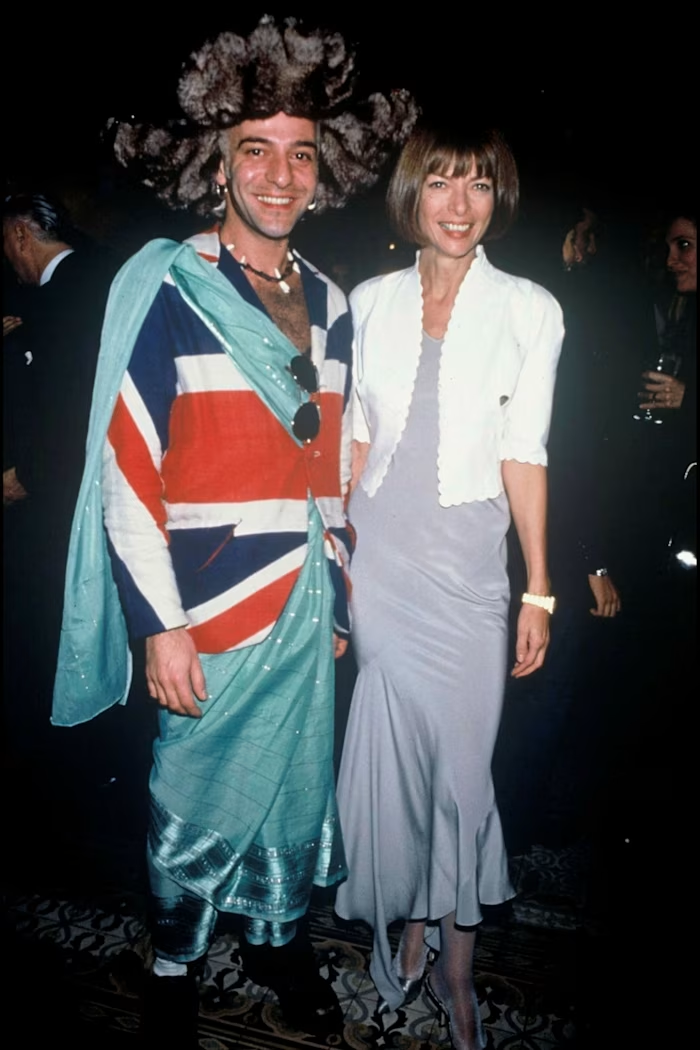
Galliano’s collapse did not come out of nowhere; it came from everywhere. Dior’s demands were inhuman – a never-ending marathon set to sprint, wrapped in taffeta, fuelled by adrenaline and expectations. Thirty-something collections a year, for both Dior and his own label, respectively. High-profile Dior ambassadors, notably Oscar-winning actress Natalie Portman, publicly condemned him and outright refused to be associated with him, which prompted his swift dismissal from Dior. Ultimately, his workaholic character and his drug and alcohol abuse all led him to his downfall.
As we know by now, fashion doesn’t nurture its visionaries; it consumes them and asks for more. It is no coincidence that some of fashion’s brightest stars, like McQueen, buckled under the same weight. When interviewed about what he felt after McQueen’s tragic suicide, all Galliano said was, “I understood.”
Obviously, Galliano’s downfall was personal, no doubt about that. But it was also systemic, the inevitable fracture of a designer pushed to the brink while being applauded for dancing on the edge.
So, can we separate the art from the artist? Could we admire the former while condemning the latter? Should we? This is the million-dollar question at the heart of the Galliano discourse, and fashion hates discomfort unless it comes in a pair of Dior snakeskin platform heels. His story unveils the messiness of human complexity: the brilliance and the harm, the apology and the wound, the work and the man.
Maybe people can’t ever look at his work without thinking of his appalling outburst. Maybe fashion fans can forgive him and overlook what he did. There aren’t any clean answers. But perhaps the truth is this: fashion must learn to hold contradictions as gracefully as it holds a bespoke couture gown.
John Galliano remains the fashion industry’s most complicated genius. He’s a figure who reshaped couture, one who broke under its weight and returned in a subdued, stranger, and more introspective way. His story is not some reimagined redemption nor ruin, but a rare middle ground: an industry forced to reckon with its own hypocrisy, reverence, and refusal to release its idols.
And that’s exactly the kind of legacy he leaves behind: a haunting, shimmering contradiction – as unforgettable as the man himself. He’s both the wake-up call and the legend, the sinner and the showman, the one who burnt and the one who rebuilt. Maybe the fashion industry may never fully forgive him, but it may never fully forsake him.

After his 10-year tenure at Maison Margiela, he has now resigned from the brand. In an industry where so many designers now struggle to secure appointments at luxury maisons, is there a spot at the table for mystery man Galliano?


Comments