
Seeing Solo: How One Afternoon at Miyakori Café Redefined Connection
- Nuraiah Binte Farid
- Jan 23
- 3 min read
In this heartfelt Food and Travel article, Nuraiah reflects on solitude and unexpected human connection through her intimate experience at Miyakori Café...

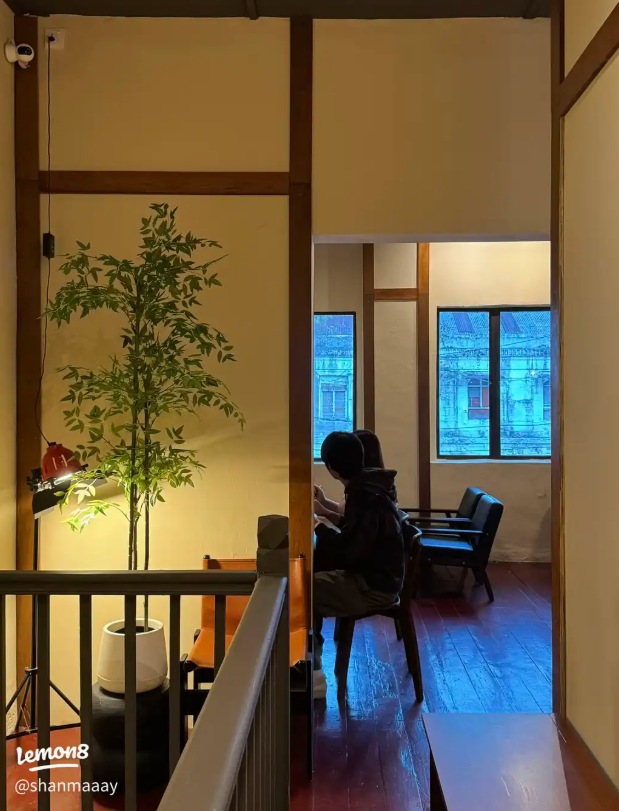
Solo travel doesn’t always mean airports, backpacks, and passport stamps. Sometimes, it looks like walking into a café alone with a pair of headphones, a cigarette (Dunhill Classic), and a quiet need to be somewhere that isn’t your room. That’s exactly how my early noon at Miyakori Café began: unintentionally, softly, and with absolutely no expectation beyond having a peaceful moment to myself.
I walked in alone, headphones on and a cigarette in hand, intending nothing more than to enjoy some time to myself. There’s a unique comfort in sitting alone in a café, the white noise of conversations, the soundtrack of your playlist, the sense of being present without being on display. For me, Miyakori became a brief escape from routine, a space where I could breathe and observe (on another note, please do yourself a favour and try their sunny-side-up karaage waffle with maple syrup and the matcha float, trust me).

Then the world: gently interrupted.
As I was sitting outside, a mixed-race couple walked by, both of them holding cigarettes too. The man slowed, glanced at me, tapped his pocket, and with a quick laugh said, “You reminded me I have my headphones with me.” His wife joined in, smiling as she added, “You reminded my husband of his AirPods!”
It was a funny little moment, the kind that smokers instantly recognise. Cigarettes have this weird, universal way of connecting strangers. Sometimes it starts with a look, sometimes with a comment, sometimes with that classic “Got a lighter?” energy. You don’t plan for these interactions, but they soften the air around you. You meet people you’ll never see again, share a five-minute slice of life, and then continue on with your day carrying an unexpected memory.
That tiny comment unfolded into a longer conversation. They asked about what I studied, and when I mentioned Economics and International Economics, they nodded politely. But when I told them I wanted to pursue defence strategy and specialise in defence economics, the tone shifted entirely. Instead of giving me the usual puzzled look most people do, the man became genuinely intrigued.
I explained that growing up as an army kid shaped my interests more than anything else. My father’s military experience influenced not only my worldview but my sense of purpose, a quiet, steady understanding of discipline, national service, and strategic thinking. It’s a niche field, yes, but one that feels natural to me.
That’s when he shared something unexpected: his father also served in the military in the Turkish army.
Suddenly, two strangers in a café were no longer just making small talk. We were sharing childhoods shaped by movement, discipline, and constant change. Army kids, no matter the country, grow up with a similar rhythm: packing boxes, moving cities, shifting schools, adapting to new environments, learning to rebuild your sense of home again and again. Whether it’s Turkey, Bangladesh, Malaysia, or somewhere else entirely, the sentiment is the same: a blend of resilience and restlessness that becomes part of your identity.
What struck me even more was how many people I met that day with similar backgrounds. Two more people joined the conversation later, both children of military men. It was almost surreal to realise how global that experience is, how universal the upbringing of an “army kid” can feel, despite cultural differences.
Of course, the afternoon wasn’t without challenges. Language barriers appeared, as they often do in Malaysia’s beautifully diverse environment. Not everyone felt comfortable speaking English, and not every sentence translated perfectly. But even in those moments of confusion, people were patient. They smiled through misunderstandings, clarified slowly, and met me halfway. It reminded me that kindness doesn’t require linguistic precision, just willingness.
The experience shifted my perspective on solo outings entirely. I had walked into Miyakori thinking I just needed a quiet escape, but I left, realising how open the world becomes when you give yourself space to exist without expectation. When you’re alone, you listen differently, observe more sensitively, and allow moments to unfold naturally. You meet people you wouldn’t normally cross paths with, and learn tiny truths about yourself in the process.
Miyakori Café taught me that connection doesn’t need time or planning, only openness. Even on a quiet, unassuming afternoon, stories are waiting to be told, perspectives are waiting to shift, and versions of yourself are waiting to be discovered.
I walked out of the café feeling a little more grounded, a little more aware, and deeply grateful. Because at the end of the day, it truly is beautiful to learn about people and to see how their experiences have shaped who they are now.


Comments