
Gen Z Humour is Not (Just) Funny
- Hajar Haq
- Oct 11, 2025
- 5 min read
Everything has become a meme, or has it? Join Section Editor Hajar Haq in our second edition of Notts Uncovered, as she picks the brain of an internet lingo expert and dissect what makes 'Gen Z Humour' so Gen Z.
Perhaps this article isn’t clickbait enough to catch your attention. Alas, here we are, doomscrolling away from the overarching question, what makes Gen Z humour so unique? So blatantly niche that only the select few millennials and "boomers" can understand it without needing a translation.
From the exaggerated “im talkin about innit” reenactments to hyper-stimulating songs on the latest “matcha dubai chocolate labubu” craze; Tiktok references have given everyone back-to-back cases of whiplash all within a 10 second video clip. Yet, behind these seemingly absurd terms lie keys to understanding ongoing issues including real-world events.

I met Safiyyah Mitha; a foundation student fluent in the language of absurd media and an aspiration for international relations. Layered and sharp, our conversation began by breaking down the social landscape we live in. “...I do think modern day humour is less about the subject and more about the act of commenting. Especially through quick reactions online, or like, memes.” Safiyyah clarified further, “Like the 6-7 joke? Me personally, I don’t get it, honestly. It feels very participatory because it’s deemed as funny (for its repetition and absurdity).”
“Humour has become desensitized.” – Safiyyah Mitha
As we continued our conversation, we progressed into how the constant digital stimulation—social media such as Tiktok, or memefied language–while having bridged international connection, has affected the social norms integrated into our generation today. “It has its strengths and challenges. It’s made us more globally aware of issues and connected communities. But I think it’s also influenced how we portray our emotions and process them, like as a form of a coping mechanism.”
‘Gen Z is the most unserious generation’. Any chronically online user may have heard this term before, and most likely agree. In fact, perhaps glorify. Yet, it begets the question, why?
The exact opposite is naturally serious—in the way they navigate a technological and social landscape shaped by a global pandemic (COVID-19), geopolitical instability, and an ongoing recession (one which I, personally, have continually seen judging from the increasingly high living costs affecting food, housing, and even relationships). The seriousness depreciates our already dismissive way of life, and thus unseriousness provides brief moments of joy and happiness. Not in satisfaction, but in shared instances of being seen and entertained. It becomes their resistance against the world they are forced to live in, in a detached, ironic way (though, in truth, it doesn’t necessarily solve anything).

“...jokes based on the capitalist system and its corruption, or even family issues or trauma. Since humour now is so contradictory, in reality, it makes some only think of it as a joke.”
By definition, a joke is ‘a thing that someone says to cause amusement or laughter’. Yet, it’s been used, weaponised even, in response to real-world issues such as in bashing the outfits of Filipino ‘nepo baby’ influencers or the enthusiastic trending of ‘WWIII Outfit Ideas’. Safiyyah asserts, “Joking on specific issues at hand needing full attention or importance almost dilutes the situation and makes it less important. Especially if it involves lives (loved ones, or yourself) about to be lost. I think laughing at them suggests your privilege in some way.”
“It also seems very unempathetic. I’m not too woke, I’m just showing basic human decency.” – Safiyyah Mitha
Summed into this wonderfully crafted sentence by Tina in her Substack girl, deconstructed, titled “Why Are We So Unserious?”, ‘Somehow, our collective unseriousness has morphed into a frightening lack of empathy and emotional intelligence…and it’s so easy to get stuck in that mindset.’ The line between satire and insensitivity thins, especially when it tackles pertinent issues requiring heart. It becomes a reminder that not all humour is harmless. Yet, the normalisation of this standard eventually risks leading us on a downward spiral towards apathy and the question of what is ethical.
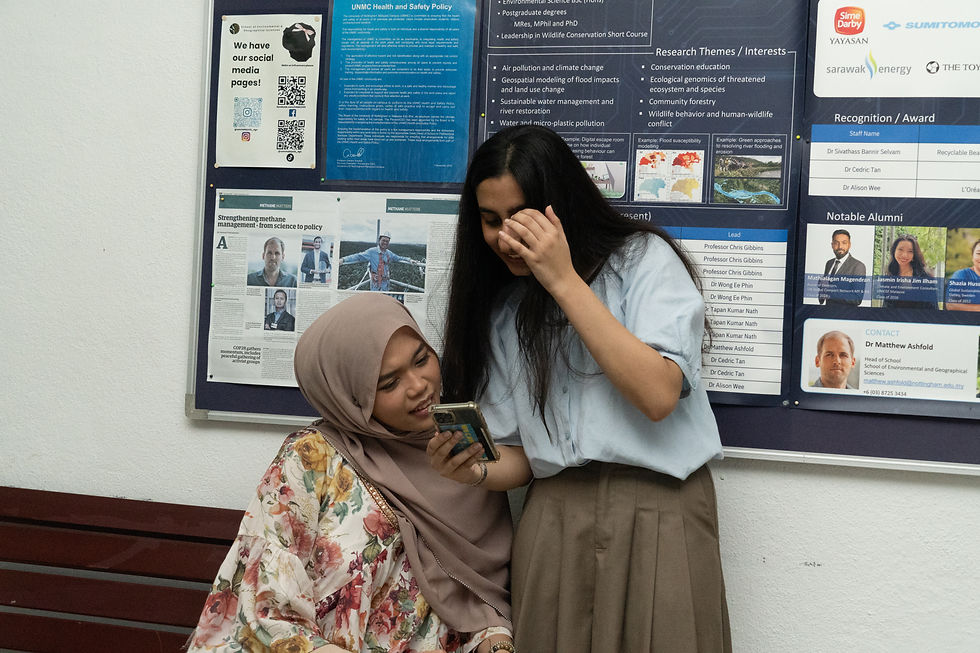
“Humour does mask people’s beliefs. Behind the surface, it could mean something else. Like the irony of it all makes it hard to take anything seriously.” Safiyyah’s response is explained as Schrödinger's Meme; where humor that’s layered with irony makes it hard to tell whether something is sincere or sarcastic. This ambiguity is part of the joke itself, and can only be discerned by knowing the source. Its complicated facade proves both a danger and security, as Safiyyah shares her viewpoint, “I believe it is a safe way to express our ideas or political beliefs. Because you can raise a serious point without sounding too preachy.”
Yet, whether outside or online, it is still possible to be involved in some serious circumstances. Safiyyah provided a few examples within her interest, “Online, we could get shadow banned because the government might not necessarily like it. Or arrested in a few cases. Like the JD Vance edited picture? A foreign guy got detained in the US because he had it in his gallery.”
“Gen Z humour is really layered. It’s a whole meta irony. – Safiyyah Mitha”
Even as I write this and JD Vance’s piercing blue orbs stare at me (from my numerous tabs), it highlights how Gen Z humour has bled through my life. It’s more than an expression of emotion; it’s a sociopolitical infrastructure consisting of both entertainment and commentary that reflects how this generation views the world—be it the one experienced by our parents, or the one we continue to shape every day. But even if the current generation remains unserious, or the next becomes sincere, let’s hope this isn’t an indicator of the world going further downhill.
More about the interviewee:
Safiyyah Mitha is currently in the Foundation of Arts and Social Science and plans to pursue International Relations for her undergraduate degree. She attributes her strong interest in politics and advocacy due to her experiences living abroad; Before coming to Malaysia in 2018, she’d previously moved from the UK and Qatar. Her passion also extends towards films, and particularly enjoys them in the cinemas.
Writer's Notes:
“Gen Z Humour is Not (Just) Funny”: Despite the short transcript I had (20 minutes in total) with only one person, the topic and style itself would be perfect to expand into the more ‘critiquing’ side of things. At first glance, humour is simply a mood or state of mind. Yet, I think we shouldn’t discredit that the satirical aspects have long served as tools for critique and reflection; especially in political charged contexts (a few examples such as historical caricature works reflecting artists’ message/beliefs, or controversial, yet outspoken, shows such as South Park).
Due to how integrated we are into social media, I do believe it’s quite hard to distinguish these experiences that are still relevant in its own, hidden way. And honestly it’s (hot-take) cute because laughter in the face of dire circumstances? Heck yeah, we and apparently our ancestors always needed some holly-jolly festivity to lighten our chest. Hence, it seemed perfect to bring in a fellow Gen Z for a podcast-style discussion rather than a professional (though a professor well-versed in the social sciences definitely provides more thoughtful insight).
While not totally research-accurate, by bringing light to this issue I hope it can enlighten an interest for further and personal investigation—as we call it, a hyperfixation.


Comments