
When Fear Meets Profit: The Hidden Economics Of Cancer Care
- Naema
- Jan 25
- 6 min read
Updated: Jan 26
“What if cancer wasn’t just a medical problem, but a business?”
That line sounds like the start of a conspiracy documentary, but hang on. Every scan, test, and anxious Google search often comes with a price tag (sometimes literally). Don’t get me wrong: doctors save lives, medicine works, and treatments matter. But once fear enters the room, the system around cancer care, with its costs, incentives, and economics, gets wonderfully complicated—and that's exactly what I want to unpack. Ever heard of Luigi Mangione’s case? Apparently, panic pays… headlines, at least.

Fear Makes Us Vulnerable (And Prone To Spending)
Cancer. The word itself makes your heart race, your hands shake, and your wallet… empty faster than your brain can process.
When someone hears “you have cancer,” decisions feel urgent, rushed, and impossible to think through calmly, like:
“Do we start treatment now?”
“Can we afford the next step?”
”Is this the best option?”
“How long do I have left?”
“What’s the waiting list?”
Emotion alters the way we perceive cost, risk, and even hope. According to Reyna et al. (2015), scholars studying cancer decision-making have found that fear and uncertainty during cancer care significantly influence how patients evaluate risks, benefits, and treatment options.
And that emotional whirlwind doesn’t just affect feelings; it affects dollars. In many countries, out‑of‑pocket expenses increase dramatically after a cancer diagnosis, sometimes hundreds of dollars a month, even for people who have insurance coverage. A study in PLOS One by Aminuddin et al. (2024) showed that the average patient spends about US$2,400 each year. Most of this money goes to medical care, travel, supplements, and lost work time. Consultations, chemotherapy sessions, and other procedures add even more, and patients often face additional costs for wigs, implants, painkillers, or other care-related items. To pay for these costs, families often use their savings, depend on their wages, or sometimes borrow money (Noorulain et al., 2022).
That’s not just a number; that’s people skipping meals to pay for medication, families borrowing money, or savings disappearing faster than you can book the next appointment. As Icon philosopher Ursula Franklin once said, “Peace is not the absence of war; peace is the absence of fear.”
The Complicated Business Behind Care
So, is cancer a “big business”? Kind of. Not the evil, mustache-twirling kind, more like the system-is-complicated-and-money-has-a-way-of-popping-up kind.
Some tests or procedures are suggested more often because they make money, not always because they are medically necessary. Research shows that hospital systems and financial setups can affect how often these procedures are done (Meskarpour-Amiri et al., 2025), through things like efficiency, surgery delays, or using new technology. While doctors try to give the best care, these system pressures can unintentionally affect their advice, adding strain for patients who are already anxious. It doesn’t make doctors villains; they save lives every day, but the intersection of fear, urgency, and profit creates a messy, high-risk environment that no one fully controls.
In extreme cases, patients’ fear and desperation can be exploited. Some organisations approach newly diagnosed patients with offers that prey on panic. For example, “assisted suicide” schemes, promising quick solutions in ways that shock and alarm. Beyond financial exploitation, fear also comes from pain, physical changes, and emotional strain of treatment; patients may not be able to work, may look different to friends and family, or face loss of a body part, which can challenge their sense of identity and self. These moments show just how high stakes are when fear, vulnerability, and money collide.
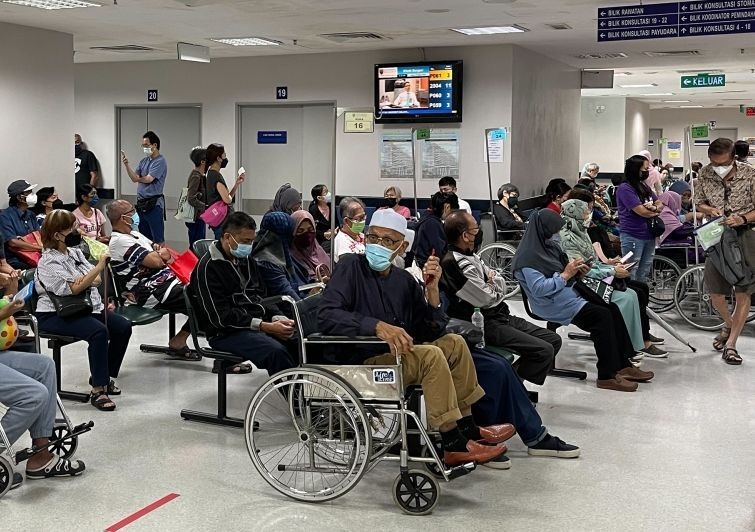
I try to put myself in a patient’s shoes, and honestly? I imagine sitting in that room, heart racing, trying to figure out what to trust, and I’d probably feel like screaming. Fear changes everything: it amplifies urgency, clouds judgment, and makes costs feel even heavier. Those “recommended” tests and procedures suddenly aren’t just medical options; they’re emotional decisions wrapped in spreadsheets.
Take Neth, a 28-year-old cancer patient from Cambodia. Just a week before her wedding, she was diagnosed with breast cancer. Beyond being scared of the diagnosis itself, she had to figure out where to get treatment, what procedures she needed, and how to pay for them. Luckily, her health insurance, the National Social Security Fund, covered almost 90% of her expenses, including surgery, chemotherapy, and hospital stays. But even with coverage, she had to navigate hospital bills, appointments, and the logistics of care, illustrating how financial structures, support systems, and fear all shape the patient experience (GONE et al., 2024; World Health Organization, 2025). Stories like Neth’s show that even with insurance and hospital support, fear and money problems still affect every choice, like which tests to take, when to start treatment, and how to handle daily life during care.
Looking at it like it's a system, I get why it’s like this. It’s easy to point fingers, but the reality is: healthcare is complicated, research is expensive, and nobody designed it to be a financial maze, but it is one. Fear and economics are always intersecting with care, and it’s not a question of morality. It’s a question of structure, incentives, and transparency.
And I can’t help but wonder: How can patients fully understand their options before fear takes over and external interests, like insurance companies, shape the guidance they receive? When fear and money collide, who should guide the decision? Can we fund research without making patients feel like walking ATMs?
I don’t have all the answers, maybe no one does, but asking these questions matters. Observing, reflecting, and questioning isn’t anti-medicine. It’s how we understand, to improve, and protect the human experience within an imperfect system.
And here’s the hopeful part: awareness can change outcomes. Better transparency, better communication, and patient advocacy make fear feel less overwhelming. Critiquing the system doesn’t cancel medicine. It just makes us smarter, braver, and maybe a little richer in understanding, if not dollars.

Are we ever fully in control of our own healthcare?
From a wider perspective, fear acts like a highlighter. It doesn’t create problems in the system, but reveals them. A single honest conversation, a clear breakdown of costs, or a supportive advocate can change everything, yet those moments still feel like lucky accidents rather than standard practice.
What if we saw fear as useful information instead of a problem? Instead of being caught off guard by strong emotions, what if healthcare systems prepared for it and helped guide patients rather than overwhelm them? Maybe transparency and empathy deserve as much attention as innovation and research.
Rushed, confused, panicked? Those moments aren’t just nerves. They’re signals.
And the good news is: when fear is acknowledged rather than ignored, patients regain a sense of control, and the system starts to look less like a maze and more like care.
But understanding care means looking closely at where it still fails.
Sooo, think you know the ins and outs of cancer care? Prove it!
UNM students—let’s analyse these crucial pain-points to better understand cancer patients and survivors at the Cancer Conspiracies Forum (CCF) on 7th February! Conduct your own factual case study and present it to the audience as we foster collective cancer action with Conspiracy Society (CONSOC).
Curious? Find out more here!
This article is written in collaboration with the University of Nottingham Malaysia's Conspiracy Society, in conjunction with their upcoming Cancer Conspiracies Forum (CCF). In a world that continues to spin facts into fiction and turn the war against cancer into a battle of spending power, truth must prevail. UNM IGNITE Magazine strongly urges its readers to join us at CCF and learn how we can contribute to reclaiming narratives surrounding cancer and provide support to communities affected by this capitalist game of cat and mouse. — Emma Gerard, Co-Editor-in-Chief of IGNITE
References:
Aminuddin, F., Raman, S., Bahari, M.S., Zaimi, N.A., Mohd Nor Sham Kunusagaran, M.S.J., Zainuddin, N.A., Mostapha, M., Ping, T.Y. and Mohd Hassan, N.Z.A. (2024). Cancer impact on lower-income patients in Malaysian public healthcare: an exploration of out-of-pocket expenses, productivity loss, and financial coping strategies. PLOS One, 19(10), p.e0311815. https://journals.plos.org/plosone/article?id=10.1371/journal.pone.0311815
GONE, M., YONG, A., CHAN, D. Z. X., & MORAND, M (2024). Private health insurance in cancer care: A case study from Malaysia. https://www.cancercontrol.info/wp-content/uploads/2024/10/48-53.pdf
Noorulain, F. N. U., Kuan, W. C., Kong, Y. C., Bustamam, R. S., Wong, L. P., Subramaniam, S., ... & Bhoo-Pathy, N. (2022). Cancer-related costs, the resulting financial impact and coping strategies among cancer survivors living in a setting with a pluralistic health system: a qualitative study. ecancermedicalscience, 16, 1449. https://ecancer.org/en/journal/article/1449-cancer-related-costs-the-resulting-financial-impact-and-coping-strategies-among-cancer-survivors-living-in-a-setting-with-a-pluralistic-health-system-a-qualitative-study
Meskarpour-Amiri, M., Shokri, N., Aliyari, S., Bahadori, M. and Hosseini-Shokouh, S.M. (2025). Strategies to reduce costs and increase revenue in hospitals: a mixed methods investigation in Iran. BMC health services research, 25(1), p.127. https://pmc.ncbi.nlm.nih.gov/articles/PMC11755954/#Sec4
Reyna, V.F., Nelson, W.L., Han, P.K. and Pignone, M.P. (2015). Decision making and cancer. American Psychologist, 70(2), p.105. https://psycnet.apa.org/doiLanding?doi=10.1037%2Fa0036834
World Health Organization, 2025. Brave enough to be seen: Neth’s story as a cancer survivor. [online] World Health Organization, Western Pacific Region. Available at: https://www.who.int/westernpacific/newsroom/feature-stories/item/brave-enough-to-be-seen--neth-s-story-as-a-cancer-survivor [Accessed 16 Jan 2026].


Well done, Naema! I couldn’t agree more. If insured patients already struggle with fear and cost, it’s painful to imagine the reality for underprivileged communities facing long queues in government hospitals. While you speak powerfully about care and systemic gaps, I also see how such approaches could support patients’ mental health and reduce the emotional burden carried by family members who worry deeply.
Such an amazing read! Keep going. The world is waiting for you, Ayatun Naema