
Inside the Soul of Guillermo Del Toro’s Frankenstein
- Anagha
- Feb 26
- 4 min read
Guillermo del Toro’s Frankenstein has secured nine Oscar nominations, but did it win over our Film & TV writer, Anagha? We dive into her hauntingly detailed breakdown to uncover what makes this gothic reimagining so unforgettable.
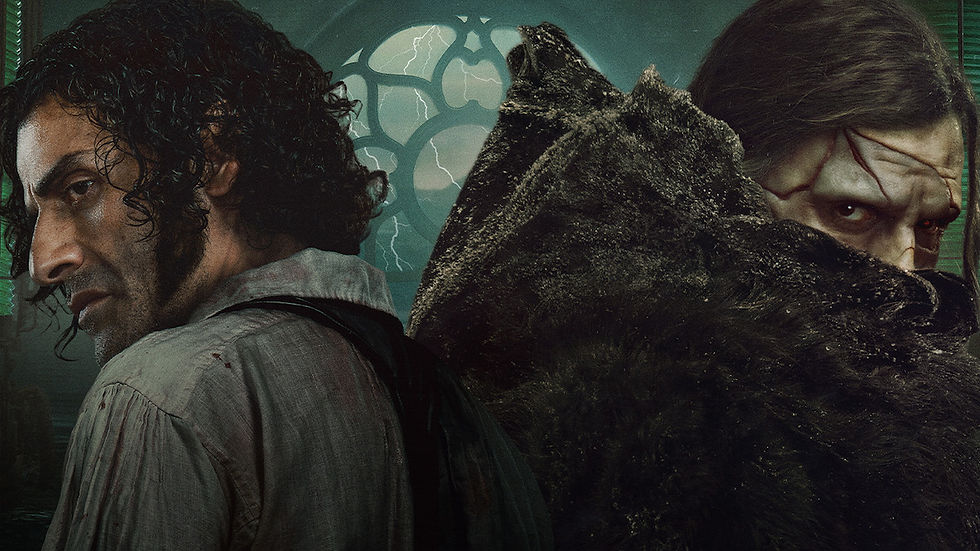
Hearing the first roar of the Creature, you don’t only feel it in your bones, you feel it in your blood, the electrical pulses of your nervous system, and the dense network of lymph vessels near your heart. It is not a scream that induces terror; no, it begs for empathy. I have had the incredible privilege of watching this film in theatres, and thus the ability to hear this guttural scream with unmatched clarity. This, along with the film's incredible musical score, makes it such a shame that it was not intended for the big screen.

Playing Victor Frankenstein
With any film adaptation of a beloved book comes the sceptics. Director Guillermo del Toro does not shy away from the fact that his version of Frankenstein strays away from Shelley’s in quite a few ways. Whilst reading Frankenstein and on Mary Shelley’s life, Guillermo felt as though she was writing about herself, and so, he set out to do the same. He added all that he learned as a son and father into this movie, thus providing this film’s focus on familial bonds. He, too, paid homage to the author by redefining the character, Elizabeth Lavenza, to represent her. What else can we expect from an adaptation of Frankenstein, except for the director to act like Victor Frankenstein himself? Where Victor takes legs from one corpse and the heart from another, Guillermo takes the core of the story from Shelley’s magnum opus and influences from both of their lives to create his own creature: Frankenstein (2025).

The Big Moral Debauchery
Multiple elements of the movie caught my eye, one of which was the controversial connection between Victor’s mother, Claire Frankenstein, and the woman who piques his interest, Elizabeth. Claire Frankenstein, draped entirely in rich, deep red fabrics, is first seen on a long stretch of stairs with her arms encasing her son. Her long veil floating and swirling in the air, in a pattern that mimics blood mixing with water. It is an imagery, a foreshadowing, and so intensely beautiful. Due to her altered look of prominent arched eyebrows and deepened smile lines, I did not immediately recognise her, but when I later looked at the cast list, I understood director Guillermo del Toro’s ingenious casting choice of having Mia Goth play both Clarie and Elizabeth.
Victor is immediately enamoured by Elizabeth, which momentarily distracts him from his ambitions. Elizabeth’s costumes always have a red accent: red umbrella, ginger hair, red crucifix; it draws the viewer to make an uncomfortable connection between her and Victor’s mother, one that is Oedipus-like in nature (oh, how gothic art adores the controversial!). The colour red carries the ghost of his mother throughout the film. These two women mirror each other: both a reason for him to live, and in their absence, a trigger for his feverish obsession with death. This uncomfortable connection, not obvious but makes itself known, forces the viewer to sit with the discomfort of moral debauchery that will never be directly addressed. Elizabeth's rejection of his advances leads to a disgruntled Victor in a bath, legs spread– no, not for fan service– but to mimic the position of childbirth, as this is when he reaches a breakthrough.

Cycles Of Abuse
Now, we move on to the Creature whom, unlike all the violence that brought him to life, is like a gentle newborn. Like a child, his first word was his parent: ‘Victor’. Victor’s initial kindness morphed into annoyance, then violence, due to his disappointment in the Creature’s intelligence. We see a cycle of abuse: Victor, who was abused by his father, does the same to his creation, his son, despite wanting to be nothing like his father.
Elizabeth eventually meets the Creature, and she is an antithesis to Victor’s annoyance and harshness; she is kind, gentle, and concerned. She finds herself drawn to the Creature. When she tries to teach him her name, and the Creature fails, unlike Victor, she sees it as a limit of her own merits rather than the Creature’s. People argue whether the love between the two was romantic or maternal, but I think it was intentionally meant to be confusing and blurred. While their connection was made palpable by Mia Goth and Jacob Elordi’s acting, I desired more scenes between them to understand the depth of their connection. Perhaps that was the intention: to make their love intense, short, and not to be understood, but I do wish to understand more of something so deep as the finding of belonging in other beings.
Oscar-Nominated Creature
As we approach the Oscar award season, Frankenstein (2025) has accumulated a whopping nine nominations, and many of them for the behind-the-scenes teams - Costume Design, Original Score, Makeup and Hairstyling, Production Design, and Sound. With the risk of sounding like a broken record player, listening to the music score in the theatre with its industrial-grade speakers truly allowed me to appreciate the compositions to their full potential. When the opportunity to visit the ‘Frankenstein: Crafting a Tale External Exhibition’ in London arose, I was quick to ignore everything else I had to do in the city that day. And what an experience it was. The costumes in front of my eyes, with no screen dimming their magnificence, I was able to see every intentional fabric fold, cut, and fabric choice, and I confidently say that the nomination for the costume design is well deserved.


Final Thoughts
Tears were shed for the Creature, and eyes were rolled for Victor. While I know it is not Guillermo’s intention to make the viewer hate Victor, I am afraid I have only been a child, therefore I can only relate to the Creature.


Comments